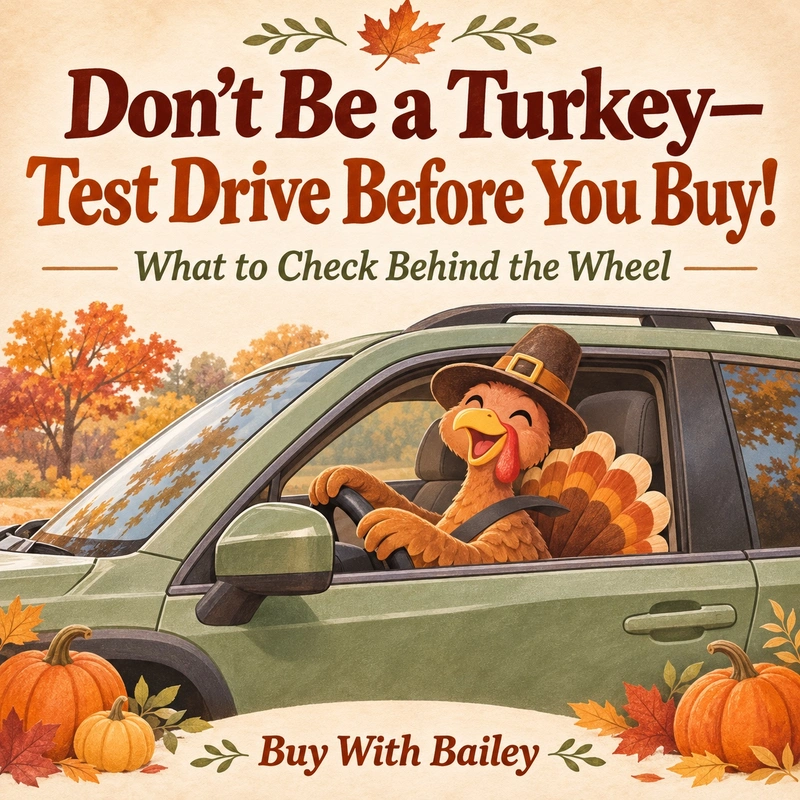
Don’t Be a Turkey—Test Drive Before You Buy
Buying a car without a proper test drive is the fastest route to buyer’s regret. A structured behind-the-wheel check separates smart purchases from lemons and saves time and money. This checklist focuses attention on what matters when the key turns and the road begins.
Pre-drive quick scan — Walk around the vehicle to spot mismatched paint, panel gaps, uneven tire wear, fluid leaks, and corroded fasteners. Inspect tires for age and consistent tread depth. Verify the VIN and mileage against the listing and service records.
Startup and idle — Listen for unusual rattles, clunks, or prolonged cranking. A steady idle with no smoke from the tailpipe is a good sign. Check warning lamps on the dash; any persistent alerts should be addressed before purchase.
Transmission behavior — For automatics, shifts should be smooth and timely, without jolts, slipping, or hesitation. Manual transmissions should engage cleanly with predictable clutch bite and no grinding. Pay attention to transmission fluid smell when accessible; a burnt odor can indicate internal wear.
Acceleration and power delivery — Accelerate briskly in different gears to check for lag, turbo surge, or misfires. Consistent power across the rev range suggests proper engine tune and fuel system health.
Brakes and stability — Test brakes from city speeds and highway speeds. The pedal should feel firm and linear, without vibration or pulling to one side. Electronic stability and ABS interventions should engage smoothly when exercised.
Steering and suspension — Drive over varied road surfaces to evaluate ride comfort and suspension noise. Steering should be responsive with minimal play. Listen for clunks, squeaks, or knocking that indicate worn bushings or ball joints.
Noise, Vibration, Harshness (NVH) — Road, wind, and engine noise levels reveal insulation quality and potential leaks. Notice any drivetrain vibrations under load or at cruising speed; they can point to balancing, U-joint, or engine-mount issues.
Climate, electronics, and visibility — Test HVAC at all settings, all windows and mirrors, wipers and lights. Confirm infotainment, backup camera, parking sensors, and driver-assist systems function as advertised. Foggy lenses, cracked housings, or dim lights affect safety and inspection outcomes.
Highway stability and cruise — Spend time at highway speeds to evaluate lane-holding, wind buffeting, and cruise control behavior. Check acceleration merging from on-ramps and downshifts for hesitation.
Parking and low-speed maneuvering — Tight turns, reverse maneuvers, and slow-speed steering reveal transmission creep, power steering assistance, and brake modulation. Confirm sensors and cameras align with actual obstacles.
After the drive — Re-scan the car for fresh leaks, odd odors, or loosened trim. Compare ride impressions with service history and recall information. Consider a professional pre-purchase inspection for used vehicles or anything with concerning symptoms.
Industry insight and final tips — Certified pre-owned programs reduce risk but do not replace a thorough test drive and inspection. Use VIN checks for accident and title history. Negotiate from observed issues rather than speculation; documented mechanical or cosmetic defects strengthen leverage.
Conclude negotiations armed with measured observations and confidence. A disciplined test drive turns intuition into evidence and ensures the car you choose behaves like the vehicle you expect to own.
If you have any questions or would like help exploring your options, I’d be happy to help. Feel free to reach out anytime for more information or to take the next step when you’re ready.
Bailey Alberson
(901) 576-3250
Homer Skelton Ford