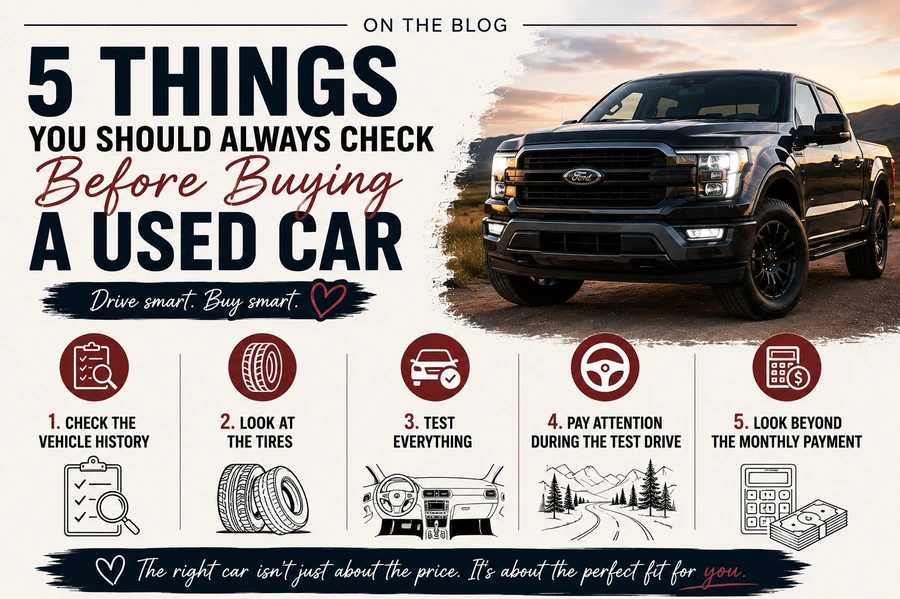
Buying a used car can be a great way to save money, but the cheapest price doesn’t always mean the best deal. Before you fall in love with a vehicle and sign the paperwork, there are a few things you should always check.
1. Check the Vehicle History
A vehicle history report can tell you a lot about what a car has been through. Look for reported accidents, previous owners, title issues, service history, and where the vehicle has been registered.
An accident on the history report doesn’t automatically make a vehicle a bad choice, but you should know what happened and how it was repaired.
2. Look at the Tires
Tires are easy to overlook when you’re excited about a car, but replacing four tires can get expensive quickly.
Check how much tread is left and whether all four tires are wearing evenly. Uneven wear can sometimes point to an alignment, suspension, or other issue that deserves a closer look.
3. Test EVERYTHING
Don’t just start the car and take it around the block.
Turn on the A/C and heat. Test the windows, locks, backup camera, touchscreen, Bluetooth, heated or cooled seats, sunroof, power seats, and anything else the vehicle is equipped with.
It’s much better to discover something isn’t working before you buy it.
4. Pay Attention During the Test Drive
Turn the radio down for at least part of your test drive and actually listen to the vehicle.
Pay attention to how it accelerates, brakes, shifts, and steers. Listen for unusual noises and notice whether the vehicle pulls to one side, vibrates, or feels different when braking.
And don’t be afraid to take a decent test drive. A quick trip around the parking lot won’t tell you everything.
5. Look Beyond the Monthly Payment
A comfortable payment is important, but it shouldn’t be the only number you consider.
Look at the vehicle price, interest rate, loan term, down payment, trade value, estimated insurance cost, and total amount financed.
A lower monthly payment stretched over a longer loan doesn’t necessarily mean you’re getting a better deal.
The Bottom Line
Buying a vehicle is a big decision, and you shouldn’t feel rushed into making it.
Ask questions. Test everything. Look at the numbers. Make sure the vehicle actually works for your lifestyle and your budget.
The goal isn’t just to find a car you love today — it’s to find one you’ll still be happy you bought months and years from now.