
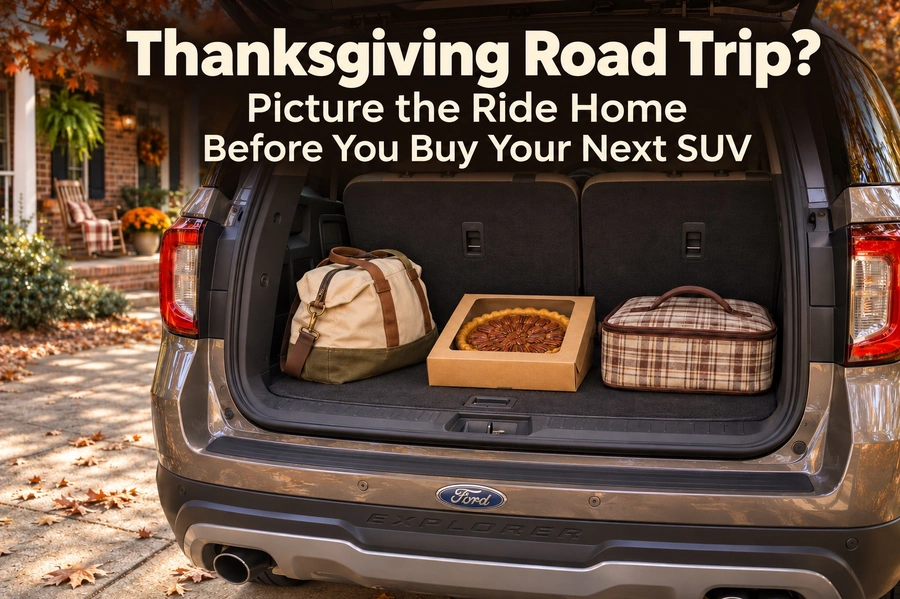
Thanksgiving road trips expose the real-world strengths and weaknesses of any SUV. The drive home after a holiday is the true test: full of luggage, a few extra passengers, cooler bags, and sometimes a trailer. Imagining that ride before signing on the dotted line turns abstract spec sheets into practical decisions that save time, stress, and money.
Cargo and packaging matter first. Look beyond quoted cargo liters and examine load floor height, split-fold seat operation, underfloor storage, tie‑down points and whether the rear hatch is hands‑free. A flat load floor with 60/40 or 40/20/40 folding seats allows bulky items to slide in without wrestling. Roof rails and factory crossbars expand capacity for boxes or a rooftop carrier while a low lift‑over height keeps the loading effort manageable for an overloaded return trip.
Passenger comfort on long drives depends on usable space rather than headline dimensions. Legroom in the second row, usable third‑row seating, rear climate vents, separate charging ports and head‑rest geometry determine whether holiday guests arrive refreshed or cranky. Practical details like second‑row sliding capability, one‑touch seat folding and accessible tether anchors for child seats shorten the loading ritual.
Powertrain choices should match realistic holiday duty cycles. Turbocharged gas engines provide solid highway passing power but can be thirsty under load. Traditional hybrids smooth fuel‑use on mixed routes and avoid range anxiety. Plug‑in hybrids offer short electric runs around town but often run on gasoline for long hauls unless charged en route. Electric SUVs deliver quiet, instant torque, but cold weather and heavy loads reduce range; planning for public DC fast chargers along the route becomes part of trip prep.
All‑wheel drive, ground clearance and winter tire capability improve safety and confidence on snowy backroads. Not all AWD systems are equal: some are front‑bias with on‑demand rear engagement, while torque‑vectoring setups actively manage power distribution for traction and handling. Electronic aids such as trailer‑sway mitigation, hill descent control and advanced stability systems matter when towing a small trailer or navigating steep driveways at family homes.
Technology and safety features shape the journey. Adaptive cruise with stop‑and‑go, lane‑centering, blind‑spot monitors with rear cross‑traffic alert and a clear 360‑degree camera system reduce stress in unfamiliar parking lots and when reversing with a loaded rear. Infotainment that supports wireless Apple CarPlay/Android Auto, multiple fast USB ports and a real headphone output for rear passengers keeps occupants connected and entertained.
Ownership realities influence long‑term satisfaction. Warranties, maintenance intervals, dealer network density and historical resale hold important weight if the next family holiday becomes an annual test. Options and packages should be chosen based on how the vehicle will be used most of the year, not just showroom appeal.
Before purchasing, emulate the holiday. Load the cargo area with bags and boxes, buckle in passengers, and take a highway run followed by neighborhood streets. Note braking feel, steering effort, audible cabin noise with full load and how simple it is to access trunk items during stops. Those minutes of realistic trial often reveal what trim level, drive system or accessory set will make the Thanksgiving return trip calm and comfortable rather than a lesson in compromise.
Choosing an SUV for holiday driving is an exercise in prioritization: cargo versatility, passenger comfort, dependable traction, and powertrain suitability rank highest. Visualize the ride home, match features to that mental checklist, and prioritize practical options that reduce friction during the busiest holiday of the year.
If you have any questions or would like help exploring your options, I’d be happy to help. Feel free to reach out anytime for more information or to take the next step when you’re ready.
Bailey Alberson
(901) 576-3250
Homer Skelton Ford